
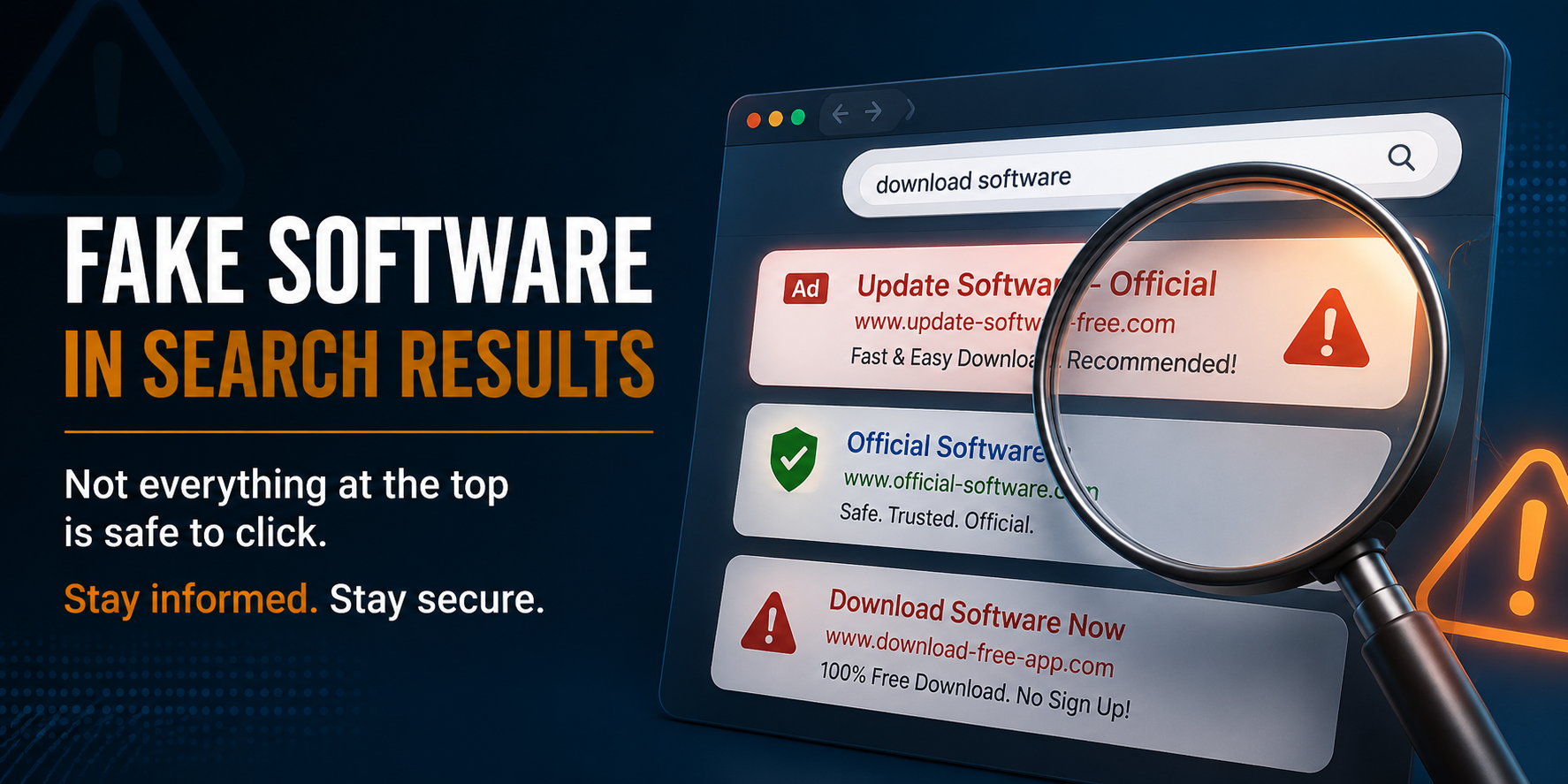
Watch out for Fake Software
If you have searched online recently for a common tool like ChatGPT, Claude, or even everyday utilities like Adobe Reader or Google Chrome, you have probably clicked a sponsored link or an AI generated summary near the top of the results without thinking twice. That is exactly what attackers are counting on.
Security researchers have found a growing wave of scams that use fake ads and cloned download pages to trick people into installing malware instead of the software they meant to get. It matters because these fakes now look almost identical to the real thing, and anyone can be caught out, not just less experienced computer users.
What is actually happening
Attackers are buying sponsored search results and building convincing fake pages that copy the branding of well known tools. Some go a step further and host their fake pages on trusted platforms such as ChatGPT or Claude’s own share links, which lets them slip past normal website safety checks. Clicking through leads to a download button that installs a trojanised file, or a set of “quick fix” instructions that ask you to paste a command into your computer’s terminal or PowerShell window.
Microsoft’s own security team has reported a rise in campaigns that impersonate popular AI brands this way, and researchers have also found fake versions of well known IT tools such as PuTTY and WinSCP being used to target technical staff directly.
What you and your team can do
- Always go to the official vendor’s website directly, rather than clicking a search ad or a link shared in a chat or forum
- Never paste a command into a terminal, command prompt, or PowerShell window because a website or AI chat told you to, even if it looks like an official installation guide
- Double check the actual web address of any download page. If anything feels off, stop
- If in doubt, ask us before installing new software on a work device
You can read more detail on how these campaigns work in Microsoft’s own security research here: AI brands as bait: How threat actors are using the AI hype in social engineering.
If you would like us to check a download before your team installs it, or if something already looks suspicious, please get in touch with Anvil support. We are happy to take a look.
Stay safe out there,
The Anvil Team